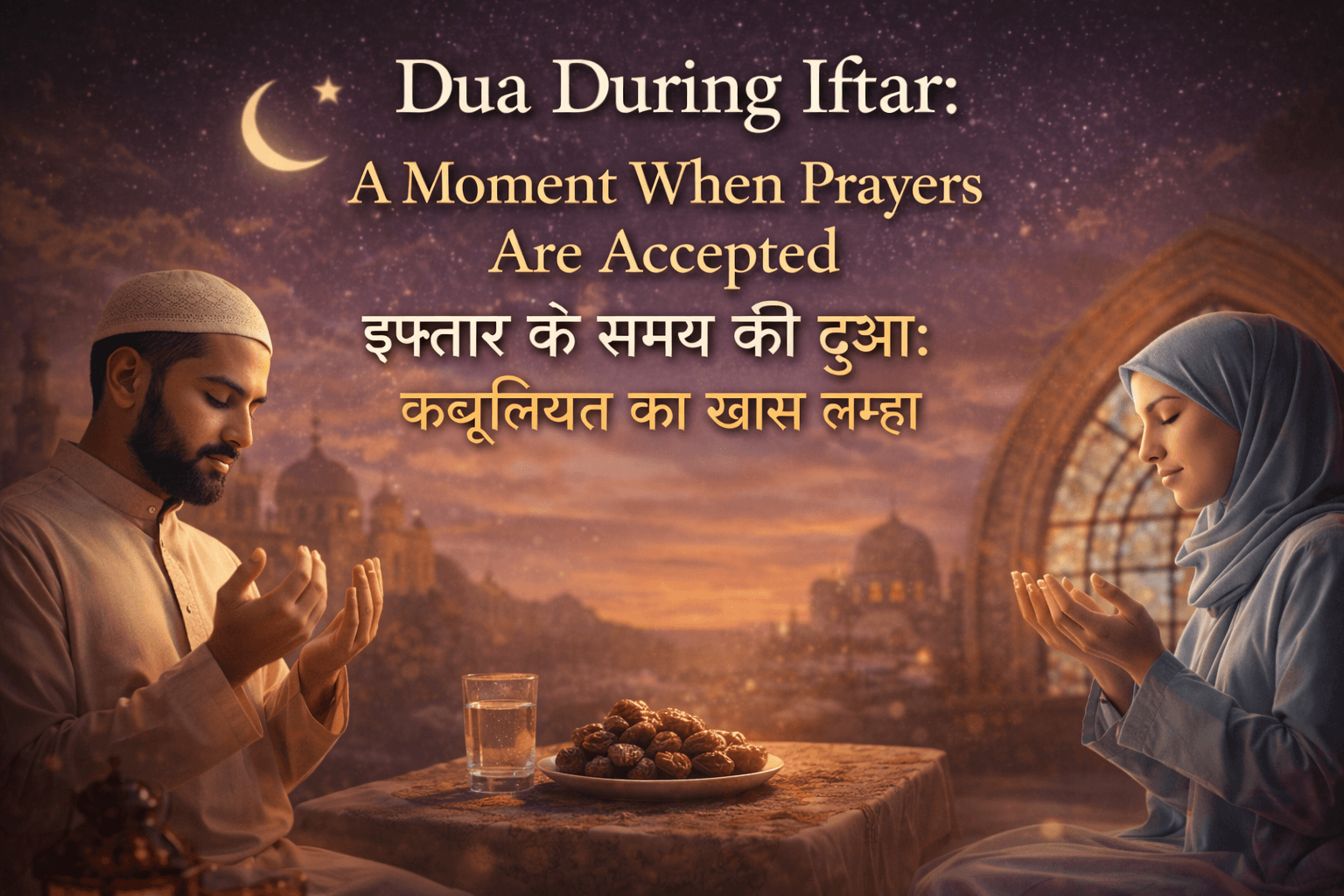
Dua During Iftar: A Moment When Prayers Are Accepted
The Special Moment Before Iftar
The moments just before breaking the fast are extremely precious. A fasting person has spent the whole day in patience, hunger, and obedience to Allah. At this time, the heart is soft, humble, and sincere — making it one of the best times to make dua.
The Prophet ﷺ said: “There are three whose supplication is not rejected: the fasting person when he breaks his fast, the just ruler, and the oppressed person.” (Tirmidhi)
This hadith shows that the time of iftar is not just recommended, but a highly virtuous opportunity for acceptance of prayers.
Qur’anic Connection to Dua in Ramadan
In Surah Al-Baqarah (2:186), Allah says:
“And when My servants ask you concerning Me, indeed I am near. I respond to the invocation of the supplicant when he calls upon Me.”
This verse comes in between the verses of fasting, showing a deep connection between fasting and dua. Ramadan is a month in which Allah invites His servants to call upon Him with sincerity.
Is Dua at Iftar Necessary?
Making dua at iftar is not obligatory (fard), but it is strongly recommended (mustahabb). It is a Sunnah practice that brings immense reward. A believer should not miss this opportunity by being distracted with food preparation or conversation.
Instead, just before taking the first bite or sip, one should pause, raise their hands, and ask Allah for forgiveness, guidance, provision, health, and success in this world and the Hereafter.
Authentic Duas for Breaking the Fast
1. Dua narrated in Abu Dawud:
“Dhahaba adh-dhama’u wabtallatil-‘urooqu wa thabatal-ajru in shaa Allah.”
“The thirst has gone, the veins are moistened, and the reward is confirmed, if Allah wills.”
2. Commonly recited dua:
“Allahumma inni laka sumtu wa bika aamantu wa ‘alayka tawakkaltu wa ‘ala rizqika aftartu.”
“O Allah, for You I have fasted, in You I believe, upon You I rely, and with Your provision I break my fast.”
What Should We Ask For?
The time of iftar is a powerful opportunity to ask for:
- Forgiveness of past sins
- Protection from Hellfire
- Guidance and strong faith
- Ease in difficulties
- Well-being for family and the Ummah
The Prophet ﷺ also said: “The fasting person has a supplication at the time of breaking fast that is not rejected.” (Ibn Majah)
Make It a Daily Habit
Every day in Ramadan, just before iftar, take a minute of silence. Raise your hands. Speak to Allah sincerely. Even simple words from the heart are powerful.
Ramadan is a training for life. If we build the habit of sincere dua during iftar, it can transform our relationship with Allah forever.